Graaf Gerd de Leeuwen
The RookGraaf Gerd de Leeuwen is the ambitious Grafter leader whose secret preparations for a violent seizure of power bring the organization into conflict with the Checquy. His cousin Ernst von Suchtlen uncovers his conspiracy and seeks a different future for their people, but the struggle ends with Gerd’s death in the assault on the Grafter base.
Identity and Background
Gerd is the Count of Leeuwen and a cousin of Ernst von Suchtlen, who is ten years his senior. Ernst recalls Gerd as an excitable relative with whom he had hunted and enjoyed a close family association, despite Gerd’s failed financial ventures and history of borrowing money. His familiar place in Ernst’s life makes the later political rupture a betrayal within a family relationship, not merely a contest between rival leaders.
Leadership and Ambition
As head of the Wetenschappelijk Broederschap van Natuurkundigen, Gerd becomes increasingly involved in the Grafters’ international operations. Ernst remembers that Gerd had once been content to oversee the workshops and enjoy the organization’s luxuries, but later grew secretive, bypassed him in communications, and focused on projects in Britain. These changes alert Ernst that Gerd’s role and aims have shifted.
Gerd’s British plans include preparing Grafter plants inside the Checquy for a putsch. Ernst learns of the conspiracy after arranging for Gerd’s secretary to be detained and the communications transcribed. The discovery is especially consequential because Ernst himself had directed the agents’ acquisition and indoctrination, and had overseen Camp Caius and the development and placement of a mass-destruction fungal weapon. Gerd’s project thus turns resources created under Ernst’s strategy toward a violent revolution that Ernst opposes.
Conflict with Ernst
The cousins’ disagreement is both political and strategic. Ernst concludes that Gerd wants to use their preparations to cripple the Checquy, whereas Ernst wants to graft: to preserve the Grafters by reaching a position of mutual advantage with their longstanding enemy. He considers a merger with the Checquy a way to avert the danger that discovery of the Grafters’ continued existence would lead to their destruction.
Ernst intends to present that merger as a fait accompli, believing that the combined forces of the two organizations could subdue Gerd and whatever forces he could muster. But before he can carry out the plan, Gerd is killed in the assault on the Grafter home base. When Myfanwy tells Ernst that his cousin died in the attack, Ernst repeats the news in shock, then reflects that Gerd might have struggled to adjust to the new situation.
Encounter with Myfanwy and Narrative Role
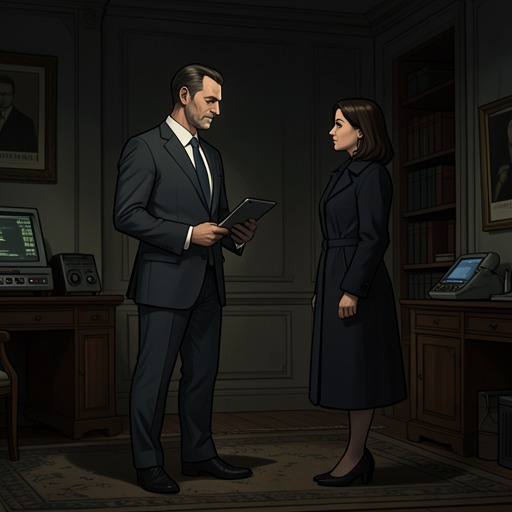
Gerd’s plans reach Myfanwy directly when he approaches her as Rook Thomas, hoping to learn what has happened to Ernst. At their meeting, he identifies himself as the Grafter leader and says he came because he had heard she was unattended, presenting the encounter as an opportunity to discuss what he wants. He offers a temporary assurance that neither he nor his people will harm her or her friends, but makes clear that the courtesy depends on his interest in her power and what he believes she knows.
The meeting’s central misunderstanding exposes how urgently Gerd is pursuing his cousin. Myfanwy does not understand what he wants from her until he names Ernst; her bewilderment is genuine, not a tactic she has chosen to conceal Ernst’s location. Gerd later contacts her again by telephone, insisting that he is the same Belgian she met the previous evening. By then, he has abandoned the meeting’s courteous approach: he tells her not to discuss their contact with the Court and threatens her, her sister, and the wider public if she continues to deny knowledge of Ernst’s whereabouts. His demands turn a search for his missing cousin into direct pressure on Myfanwy, while revealing the violent scale of the consequences he is willing to invoke.
Final Confrontation and Death
At the Grafter home base, Gerd confronts Joshua Eckhart amid a battle involving newly released warriors and the Barghests. Eckhart’s later account describes Gerd growing blades of bone from his arms and dueling him in a chamber hung with giant sacs and cocoons. Two Barghests members, revealed as traitors, turned on their comrades, but their Grafter enhancements did not save them. Eckhart finally fashioned a javelin from a chain and killed Gerd by driving it through his head. The account gives the coup plot a physical end: the leader who had prepared a violent seizure of power dies in the very assault that dismantles his position.
Consequences and Narrative Significance
Gerd’s death closes the political crisis but leaves its intended alternative unresolved. Ernst had hoped to combine the Checquy and the Grafters, arguing that cooperation could offer a way for his people to survive discovery; he planned to confront Gerd with that merger only after his own experimental heart had regenerated. Myfanwy’s report that Gerd was dead instead makes the proposed settlement a response to a changed reality, not a bargain between the cousins. Ernst’s stunned repetition of the news gives way to the subdued thought that Gerd might have found the new situation difficult to accept. The ending therefore joins a failed coup to a family loss: Gerd’s ambition had turned the resources of Ernst’s organization against the Checquy, while his death removes the very relative whose opposition Ernst expected to overcome.